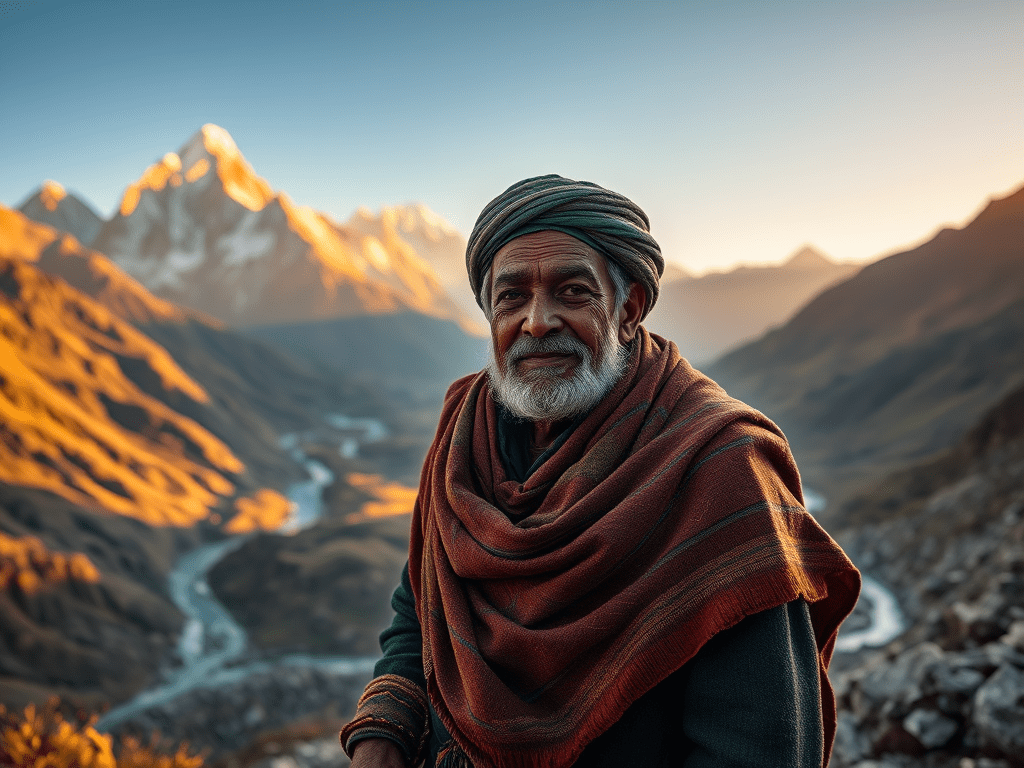
Picture a dawn breaking over the Himalayas, thousands of years before roads or temples—Uttarakhand in its raw infancy. Among jagged peaks and rushing rivers, the Kols step into frame, the land’s first shadows. Their story starts in silence. It is etched on cave walls. It stretches into a caste still known today: the Koli or Kolta.
Our lens zooms to Lakhudyar, Almora. Red handprints, deer, and tigers mark rock shelters—Stone Age art, maybe 10,000 years old. Nearby, flint tools gleam, sharp from hunts through Kumaon’s wilds. These are the Kols, some say—hunters and gatherers, lean and tough, roaming where the Ganges begins. Scholars tie them to “Kolarian” tribes, Munda-speakers from eastern India, perhaps wanderers who reached these hills. They lit fires, tracked game, and left their mark—early artists of a prehistoric world.
Centuries churn. Around 1500 BCE, the Khasas—Indo-Aryans with herds and hymns—sweep in from Central Asia. The Mahabharata whispers of Uttarakuru, a north of tribal “Nishadas”—maybe the Kols among them. Did they fight the newcomers? Trade with them? Or blend in? The Khasas settle in Garhwal and Kumaon, their villages sprouting where Kols once roamed. In Jaunsar-Bawar, near Dehradun, tales hint at short, dark-eyed folk. Kol echoes—fading as the newcomers rise.
Time leaps to the first millennium CE. The Katyuri kings carve Kumaon’s history from the 7th century, their Baijnath temples built on older bones. Here, the Kols’ trail twists. Some historians like Badridatt Pandey in Kumaun ka Itihas suggest a transformation. They propose that the Kols morphed into the Koli caste. These individuals became weavers and laborers woven into the social fabric. Were they pushed to the margins, their spears traded for looms? At Didihat, Paleolithic tools—hundreds of thousands of years old—hint at their ancient start, but no text names them Koli yet.
By medieval days, the Koli/Kolta caste emerges clearer. King Ajai Pal unites Garhwal in the 14th century, his forts towering over a land now layered with castes. British records from the 1800s—like George Traill’s 1828 surveys—find “Koltas” in the hills, bonded workers under Khasa landlords. Short, wiry, often dark-skinned, they’re farmers, porters, or servants—some say slaves—tied to villages like Pauri. Ethnographers like Edward Dalton (1867) saw “Kolarian” roots in them, but the link’s shaky. Are these the Kols, fallen from free hunters to a downtrodden caste? Or just a name slapped on tribal remnants?
Zoom to today. The Koli/Kolta live on—listed as a Scheduled Caste in Uttarakhand, their numbers small but stubborn. In Almora’s markets or Dehradun’s fields, they carry surnames like Koli or Kolta. Modern studies show their DNA is a mix of ancient tribal blood and Khasa lines. Those Lakhudyar handprints still stare out—did their makers become these Koltas, weaving cloth instead of tales? History’s coy. “Kol” might’ve been a loose label for early natives, shrinking to “Koli” as empires rose.
Their journey’s a thread through Uttarakhand’s soul. From cave artists to forest folk, they became a caste under kings and colonizers. The Koli/Kolta carry that past. It may be the Kols’ last echo. They work the land where their ancestors roamed free. The Kols-to-Koltas story whispers of roots that never fully fade.
 Moon at Half Past Noon
Leave a comment