
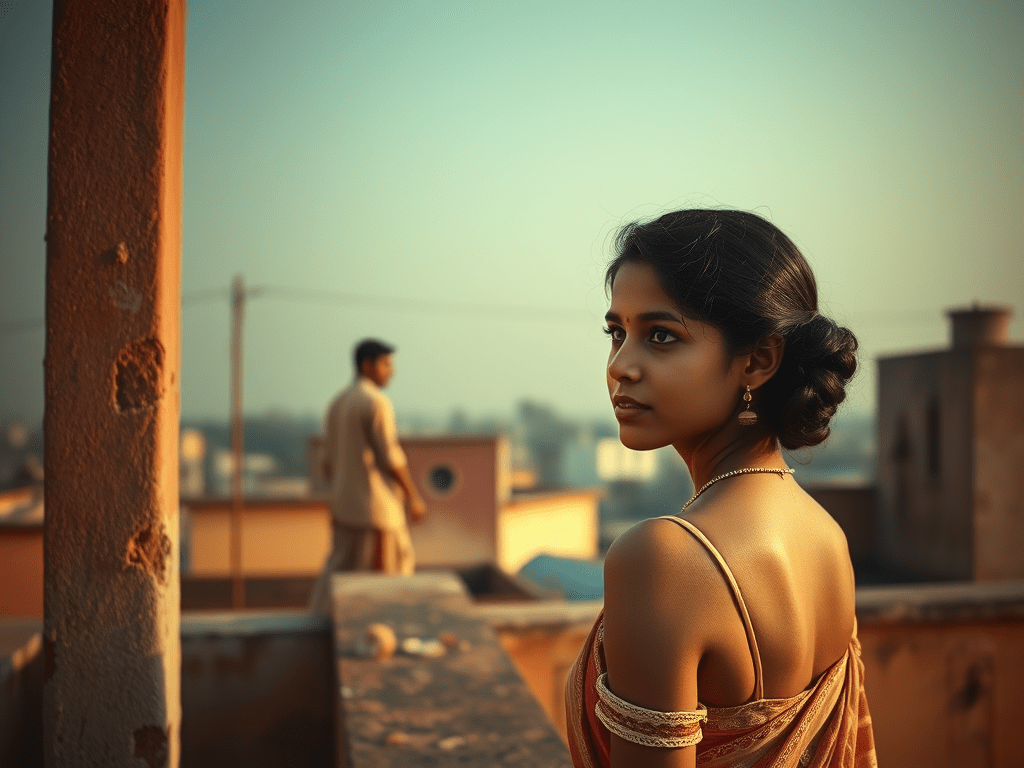
Translated from the original – किसी जमाने की बात by Kapil Sharma
Let me tell you a tale from a bygone era. If you want to spin an old yarn, starting with “Once upon a time” casts just the right spell on folks. They believe that the era you’re talking about is definitely not this one. Anyhow, there isn’t much difference in assuming and believing. You you are great at making assumptions you can believe anyting.
Anyways, I was about to regale you with a story from such an era. Picture a time when a single rupee could feed an entire family for a whole month—a time when the common man hadn’t the faintest clue about petrol was. So, its price—whether cheap or dear—didn’t really bother him one bit. Oranges were only found in orange season, and mangoes only graced the summer. And, no one dared call bottled juice “mango juice” without risking a scandal. That era was something else altogether. Then, Yamuna River flowed—you could see it flowing, mind you, without stinking, when you got closer. There was no need for grand cleanup campaigns or government schemes, which meant no politician was lining their pockets over it either. The Ganga was pristine enough, though people still flocked to wash away their sins. No saintly woman swore to die for its purification back then. There was simply no need.
That’s how the era was, and the people in it? They’d wake up at the crack of dawn, slip into their pajamas, and stroll about, brushing their teeth with neem twigs. Poverty existed, sure, but starvation deaths were rare—or at least, few enough that people generally got a full belly. Death came from other quarters: cholera, smallpox, plague—those were the usual culprits. Smaller ailments could kill too, but they claimed fewer victims. Doctors and medicines had little to do with survival rates. People stayed alive mostly because they’d shrug and say, “Enough have died from this disease; we’ll wait for the next one to take us.” The government didn’t bother much with these plagues, partly because it couldn’t do much. By the time orders to act trickled in from foreign lands, those meant to die were already gone, and those waiting for the next plague were still kicking. The disease would tally its score and call it a day.
In that very era, when Chamanlal first laid eyes on Lilavati, his breath caught in his throat—or so it seemed. What I mean is, the poor chap was gobsmacked for a moment. Not because Lilavati was some dazzling beauty, mind you, but because he’d never seen a woman’s bare shoulder before—not even his own wife’s, whose match was made straight from God’s drawing board. Their gauna (post-wedding homecoming) hadn’t happened yet, so forget shoulders; he’d barely glimpsed her nose. So, when Chamanlal saw Lilavati’s bare shoulder, as I mentioned, “his breath seemed to stop.” Ask a shrink why it hit him so hard, and they’ll rattle off a dozen right and wrong reasons. But the real deal? Ever since Chamanlal got his hands on a one-paisa Koka Shastra—a racy little pamphlet—he’d been more engrossed in the art of lovemaking than in learning English. Lilavati’s bare shoulder set his Koka Shastra-fueled imagination rippling a bit too vigorously. In today’s lingo, the guy was frustrated, plain and simple.
Chamanlal’s father—back then, fathers were called father, not “Papa” or “Daddy”; those came later. Though some folks used tacky, catch-all terms like Babuji, but they were a minority. Anyway, Chamanlal’s dad, Raushanlal, was a government postman. Thanks to a hefty dose of connections and a pinch of luck, he worked in the same city he lived in, unlike most postmen banished to jungles or far-flung villages. His job meant delivering letters across town, including to the bigwigs’ bungalows, where dogs and watchmen barred his entry. He longed to step inside those grand homes, but no dice. Years later—maybe twelve or fifteen—he gave up that dream. Instead, he passed it on to his son, as fathers often do, calling it a “vision.” Raushanlal’s vision was this: his only son, Chamanlal (the rest—seven brothers and two sisters—had succumbed to cholera, smallpox, and sundry diseases), would study hard, become a government officer, take bribes, build a massive bungalow, and then sit inside while a dog or watchman kept pesky postmen like Raushanlal out. The only hitch in this grand plan was whether the gatekeeper should be a dog or a watchman. Raushanlal had never owned a dog; his only run-ins were with street mutts that hounded him everywhere, not just at bungalows. Watchmen, though, he only met at these elite gates. He couldn’t unleash a pack of dogs across the city, so in his daydreams, he mostly pictured a watchman blocking the postman, with a dog making rare cameo appearances.
This dream weighed heavy on Chamanlal, who toiled day and night to finish his studies. It’s why, despite being married, his gauna was delayed, even though lads his age were already fathers to two or three kids. His father-in-law had pressed him a few times, even dangled extra dowry, but Raushanlal wouldn’t budge.
And then it happened: Chamanlal saw Lilavati’s bare shoulder. This tale belongs to a sliver of that era when Chamanlal was in his second year of college. Call it fate or the magic of ash from Pindi’s Pir Baba, but Chamanlal was a stellar student. While most boys took two or three years to pass a single grade, he sailed through in one and was on track to graduate. (Side note: Raushanlal’s mother had fed Chamanlal’s mother that sacred ash when he was still in the womb.)
Now, let’s backtrack to why Chamanlal even saw that shoulder. We need to start at five in the morning, when folks in pajamas wandered about, neem twigs in mouth. Chamanlal, being a model student, had model habits: early rising, morning walks, no tea, no beedis. So, at five sharp, he woke up, gargled with water from a jug, and climbed to the roof to snap a neem twig for brushing. He didn’t care for the puny neem in the courtyard—too mild for his taste. To him, a neem with less bitterness meant fewer medicinal perks, so why bother? He felt the same about teachers who didn’t thrash their students: what could a soft master teach? So, he headed for the big neem by the gate, which required a rooftop trek to reach its higher, thinner branches. Tree-climbing antics weren’t his style.
Meanwhile, Lilavati, daughter of Lala Bhagmal—or rather, his fourth daughter—was sleeping on the roof that night. Why? Because relatives from Daraspur—her uncle’s family—had taken over the house. Everyone knows that when guests arrive, you hand over your rooms. That’s just how it was back then. These days, relatives either don’t show up or get shooed out quick to avoid a hassle. But in that era, putting up with inconvenience for kin was a badge of virtue. Bhagmal got along swimmingly with Daraspur’s uncle, who was famed for fixing top-notch matches. With four daughters to marry off, Bhagmal was happy to surrender his whole house to the man. So, Lilavati ended up on the roof, joined by her three sisters, mother, grandmother, and the maid, Rangili. But since this story’s about Lilavati, we’ll focus on her. She was fast asleep up there.
The night before, kitchen duties had dragged on late. As the eldest sister, Lilavati handled half the cooking, while her younger siblings, who attended a school-like building, dodged most of it. Rangili’s job was to train Lilavati in mastering the realm of her destiny, the kitchen. With guests in the house, the workload doubled. Lilavati cooked, cleaned, and ate only after everyone else—part of her “wife training.” By the time she and Rangili hauled their bedding to the roof, her mother, grandmother, and sisters were out cold. Lilavati found a spot near the parapet, spread her mattress, and crashed. Back then, girls were raised knowing they’d be married off at a certain age and sent to their husband’s home for good. Feminism hadn’t yet trickled into the middle class, so girls accepted their lot with a smile. Lilavati fell asleep the moment she hit the mattress.
Around 3:30 a.m., a chill woke her. She realized she’d forgotten a blanket. The days hovered between summer and winter, pleasant by evening, but she’d always slept indoors before, so the rooftop cold caught her off guard. She lay there, teeth clenched, hoping to tough it out. But cold has a way of creeping deeper once it starts. She sat up, too spooked to go downstairs in the dark, with lizards chirping and neem leaves rustling in the breeze—probably making her colder. After sitting a while, she stood and paced the parapet, hesitantly at first, then faster as her body warmed and courage grew. The eastern sky turned murky as dawn approached; city roofs don’t show a rosy glow, just a grimy haze. Her family and Rangili were still snoring, but Lilavati, now awake, figured she might as well head downstairs. She bent to pick up her mattress, her kurti tugging awkwardly. Exhausted from a sleepless night, annoyed that her headscarf had slipped, and now wrestling with a stubborn kurti, she yanked at it in frustration. The kurti, unaccustomed to such force, lost its top two buttons, leaving her shoulder bare.
Now, let’s check in on Chamanlal. You already know he was a paragon of good habits, strolling in pajamas with a neem twig at dawn. That morning, he’d climbed the roof to snag a prime twig, and in his quest for the perfect one, he’d perched on the parapet, wrestling with the neem’s thicker branches. As he tugged and angled for a better grip, his eyes wandered to Lilavati’s roof. No, he didn’t spot the shoulder right away. First, he noticed her entire female clan sprawled asleep, except for Lilavati, who was up and pacing. A narrow alley separated their roofs, so he couldn’t see every detail, but anyone could tell Lilavati had been lying there and was now wandering about. Lilavati was young, and youth makes everyone radiant. Chamanlal himself was proof of that—or check your own old photos; everyone looks like a film star in their prime. So, with Lilavati’s youth and his recent Koka Shastra thrills in mind, Chamanlal’s gaze, once it drifted to Bhagmal’s roof, didn’t budge. He kept staring at the lone figure moving among the sleepers. Lilavati, mind you, hadn’t noticed him. If she had, she’d have at least sat down, maybe lain back, or even bolted downstairs. But she didn’t see him, and he couldn’t stop gawking. That’s when the kurti-yanking, shoulder-baring incident went down.
That shoulder pierced Chamanlal’s mind like an arrow through a pumpkin. (No, I’m not sold on arrows in hearts either.) Shoulders are soft and round, not exactly mind-piercing material, but call it another figure of speech—or maybe back then, that’s just how it was. Whatever the case, Chamanlal couldn’t shake that shoulder. Every book he opened showed him that shoulder. It haunted his dreams at night, floated in the morning sky, stared back from his dinner plate, shimmered in the river’s water. Lilavati’s shoulder became his entire existence.
Raushanlal tried everything after that. He fulfilled his vow to Pindi’s Pir Baba, consulted other saints and fakirs, even ignored well-meaning relatives’ advice and took Chamanlal to a doctor. But Chamanlal stayed mum, eyes wide and vacant, because that shoulder had hijacked his brain. Someone suggested holding the gauna—it might fix him. Maybe it would’ve. Pent-up desire can drive a man mad, and fulfilling it might’ve snapped him out of it. But his father-in-law shot the idea down cold. He was the bride’s dad, not her enemy—why toss her into a mess? He refused outright, even when he’d once been open to upping the dowry. Now, he wouldn’t budge, even if offered no dowry at all. Chamanlal, kicking his father’s dreams to the curb, clung to visions of Lilavati’s bare shoulder, while Raushanlal wept.
Meanwhile, Lilavati, the unwitting cause of this fine young man’s unraveling, had no clue about any of it. She hadn’t spotted Chamanlal on the roof that day, nor did she think twice about her bare shoulder. Fair enough—guys might tremble at brushing a girl’s fingers; maybe girls feel the same about a man’s touch. But your own shoulder? It’s no big deal, and Lilavati forgot it like the trivial thing it was. Soon after, her Daraspur uncle fixed her match with Nihalchand, the eldest son of Gopichand from the same town. Nihalchand had just won a kerosene license and needed cash for a new shop, which Bhagmal happily supplied. Lilavati, content in her parental home, dreamed of her future as a bride, oblivious that someone nearby was dreaming—not of her, forgive me, but of her bare shoulder.
Then one day, Chamanlal fell to his death from the very parapet where he’d been snapping twigs and glimpsing that fateful shoulder. Call it a storybook twist or sheer coincidence, but as Chamanlal slipped while staring at Bhagmal’s roof, crashing to his end, Lilavati’s wedding procession was circling the fire at that very moment.
 Moon at Half Past Noon
Leave a comment