
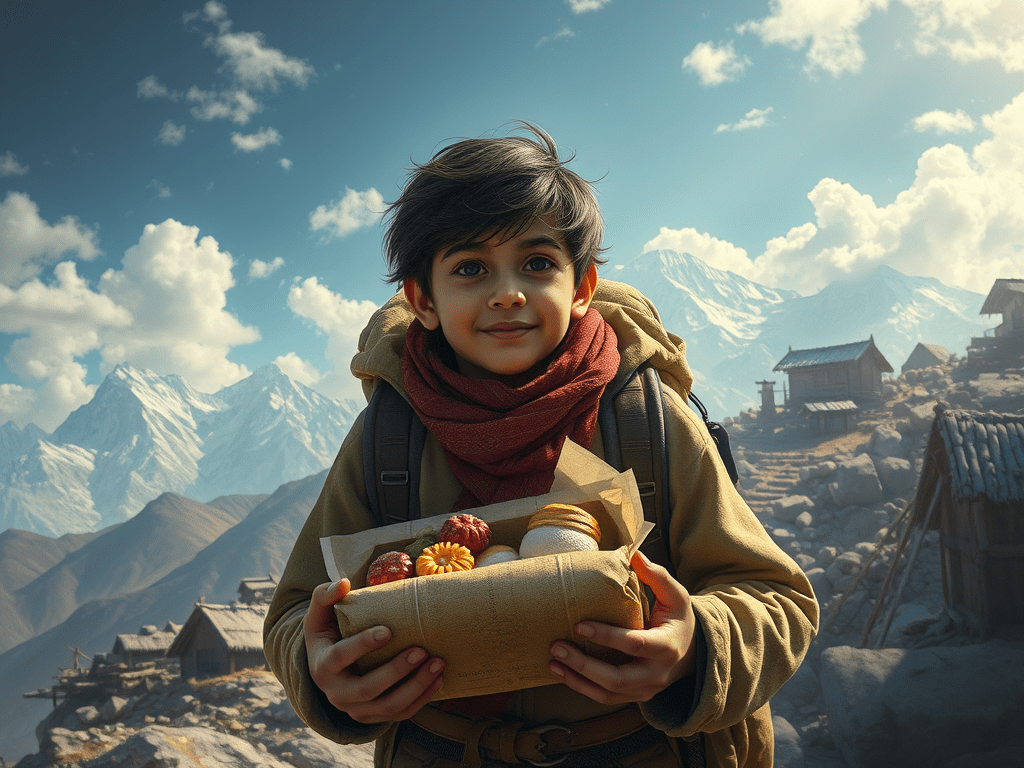
(In a poignant tale set amidst the grueling summer and monsoon season, young Veerjyu embarks from Kidwai Nagar, Delhi, on his first salary. His mission: to deliver a parcel of traditional remedies and sweets from his mother to his ailing Mausi in a remote Himalayan village, a three-day walk from Kathgodam. His journey exposes him to the harsh realities of rural life, from indifferent bureaucracy leading to a friend’s ruin, to encountering death on the arduous mountain trails. The challenging terrain and systemic struggles form the backdrop for his personal sorrow upon reaching Mausi.
The term Halkara (हलकारा) refers to local messengers or informers in the hills. They are vital conduits of news, gossip, and information, traversing remote villages where formal communication is scarce. In the poem, they act as the collective voice of the community, whispering truths about bureaucratic injustice (“swallowed by sarkar”) and singing mournful laments, encapsulating the deep emotional and social fabric of the region.)
From Kidwai Nagar, summer’s sweat,
Upon his first salary, Veerjyu, on his journey set.
His mother’s chunni wiped his face,
“Tell Mausi,” from Durga’s place.
She gave him sweets and gur so brown,
A parcel bound for a mountain town.
For aching joints, Rasina balm,
And bhutua seeds, for cough’s soft calm.At Kathgodam, the mountain’s door,
“Jai Nanda Devi!” the porters swore.
With doka strapped, Veerjyu faced the call,
“Bela Village, three days’ walk for all!”The Old Delhi station, loud and wide,
He’d swapped bidis where strangers sighed.
A soldier shared his lota’s drink,
“The hill roads here are steep, I think.”
At Loharkhet, where oak smoke curled,
Like grey hair in that chilly world.
The sherpas snored in pankhis deep,
While village secrets, halkaras would keep.
They whispered of a friend, his shop undone,
“Swallowed by sarkar, beneath the sun.
No license for his atta bright,
He pulls his ekka now, in Haldwani’s light.”
Through Kainchi Dham, the mules did bray,
“Hey Bam-Bhole!” along the way.
Veerjyu traded paan for fresh milk white,
A fake HMT for honey bright.
At Bhutia’s bhatt, on the hard floor deep,
With thick blanket, Veerjyu fell asleep.The cold night passed, the stars grew dim,
Dawn broke on a sight, solemn and grim.
A bedfellow lay next in the morning light,
“He fell with bhaang,” the bearers sighed,
“Last night, snow and cold regret did ride.”
Veerjyu saw the corpse, still and cold,A silent tale the crows had told.
No shroud but khadar, thin and worn,
A peasant’s feet, blistered and torn.
“Ram Naam Satya Hai!” the people cried,
As ants crawled where the poor man died.
A chilling whisper seemed to fall,
“You too shall rest, beyond it all.”
To Bela Village, Veerjyu pressed on,But Mausi’s naula, dry since dawn,
Like a starving ghost, drank mist so thin,
A silent sorrow from within.
Her chulha cold, with weeds entwined,
No attar scent, no joy to find.
The pandit spoke, his voice so low,
“She left before your steps could show.”
He saw her ledger, debts still due,
“Forty-two rupees, a lingering few.”
Her brass thaal with neembu stains,A life departed, through sun and rains.
Veerjyu knelt by her silent form,
Beyond the reach of any storm.
He placed Rasina on her knees so still,
And bhutua seeds on the barren hill.
He burned the pyre, with heart so sore,
Then turned to face the path once more.The parcel rested, heavy with woe,
A gift undelivered, where none could go.
At Golu Temple, high and grand,
He offered Mausi’s chunni from his hand.
“Lugadi devi, take these now,” he prayed,
A solemn offering, silently made.
The priest then spoke, with solemn art,
“The Pahad claims its due, son, from your heart.
First your own father, brave and bold,
Now Mausi’s story, sadly told.”
Downhill they journeyed, halkaras sang,
A mournful echo, through hills it rang:
“The mountain whispers, a tear for the gone,
Each sunrise brings a new, lonesome dawn.”
The parcel lay, a mother’s tender tear,
A heavy memory, forever near.
 Moon at Half Past Noon
Leave a comment