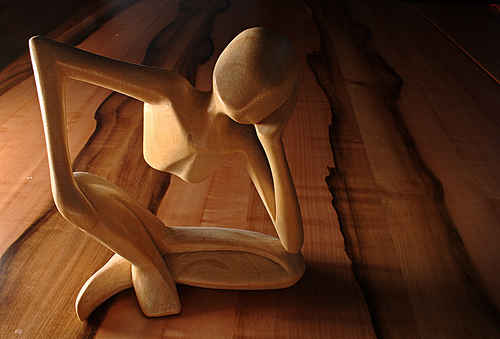

The silence in the house was a physical thing, a pressure against the eardrums. It was the sterile, architectural silence of a tomb, broken only by the hum of the refrigerator. For two years, since Dhruv’s death, this silence had been the primary language between Pitamber and Subhashini. He sat in his armchair, the blue light of a muted television painting his face in shifting shades of grey. He had built this house, this life, on a foundation of logic and order, a fortress against the chaotic superstitions of the Uttarakhand village they had left behind thirty years ago. Grief, he believed, was a problem to be managed, contained within the neat walls of a rational mind.
In the kitchen, Subhashini moved with a quiet efficiency that had once been comforting and was now a source of profound irritation. Her hands, weathered and capable, wiped a counter that was already immaculate. She placed the last dried bowl in its cupboard with a soft click. She did not look at him when she spoke, her voice cutting through the hum.
“The Jagariya will come on Saturday. For the Jagar.”
Pitamber didn’t move. The words seemed to hang in the air, foreign and obscene. He turned his head slowly, a calibrated motion of disbelief. His voice was a low rumble, the first tremor of an earthquake.
“No.”
“It is decided,” she said, her back still to him.
He stood, the sudden movement violent in the quiet room. “I will not have that… that village superstition in this house. This is not some backwater. We are not crackpots.”
Subhashini finally turned. Her eyes, which he had avoided for months, were unwavering. “This house is broken,” she said, her voice devoid of heat, a simple statement of fact. “I am fixing it.” She walked past him, leaving him standing alone in the cold light of his fortress.
On Saturday, they arrived. Two men in simple, coarse kurtas, their presence an affront to the room’s beige aesthetics. They were an invasion of the past, of the world he had worked so hard to escape. He watched from the threshold of his study as they spread a cloth on the floor, pushing back the modern furniture. His daughter, Tara, hovered on the stairs, her arms crossed in a posture of modern anxiety, a woman caught between two worlds.
The lead Jagariya lit a lamp. The smell of ghee and incense, a scent Pitamber associated with a life he’d shed, began to permeate the air, an olfactory assault on his sterile environment. Then, the man struck the Dhol.
THUMP.
The sound was not loud, but it was dense, visceral. It didn’t echo off the drywall; it seemed to be absorbed by it, a heartbeat in the bones of the house. Pitamber’s jaw tightened. This was a charade, a performance for the grieving. He would endure it, and then he would scrub the house clean of its memory.
As the afternoon bled into evening, the drumming began in earnest. A photo of Dhruv on the mantelpiece rattled, then fell face down with a muffled crack. Tara gasped. Pitamber strode over, his movements stiff. “A vibration from a passing truck,” he announced to the room, though there had been no truck. He felt a flicker of unease, a crack in his logical foundation, and hated himself for it. The lights in the hallway flickered once, twice. Faulty wiring, he told himself. Coincidence.
Night fell, and the ritual reached its peak. The drumming was a frantic, relentless pulse. The Jagariya’s Garhwali chant was a low, guttural drone that vibrated through the floorboards. Subhashini sat in the center of the circle, eyes closed, swaying. The family and friends gathered around the room were a spectrum of reactions—skepticism, fear, morbid curiosity.
Then Subhashini’s breath hitched. A low moan escaped her lips. Her body began to convulse, her head lolling back at an unnatural angle. This was too much. This was a violation.
“Stop this!” Pitamber yelled, taking a step forward. “Stop this now!”
His voice was swallowed by the drumming. Subhashini’s body went limp, slumping to the floor. For a terrifying second, there was only the sound of the drum and a collective intake of breath. Then, with a sudden, unnatural rigidity, she pushed herself up. Her movements were jerky, puppet-like. When her eyes opened, they were not her own. The deep, weary pools of his wife’s eyes were gone, replaced by a sharp, restless, unnervingly masculine energy.
The head swiveled, a graceless, mechanical motion, and fixed on Tara. The voice that emerged was a strange, layered harmony of mother and son, raspy and strained.
“Tara-Bara.”
Tara flinched as if struck. The childhood nickname, a secret shared between siblings. “You still think I didn’t know it was you who stole my cigarettes? Don’t carry that. It wasn’t your fault. None of it.”
A sob tore from Tara’s throat. A memory so specific, so private, it shattered her composure. She collapsed into a chair, broken.
The entity’s gaze now landed on Pitamber. The muscles of Subhashini’s face contorted into a lopsided, challenging smile. It was Dhruv’s smile. Pure, defiant Dhruv.
Pitamber stood frozen, a man watching his reality atomize.
“Still trying to make me a good American lawyer, Dad?” the voice rasped.
The air left Pitamber’s lungs. The smile on his wife’s face faded, replaced by a profound sadness that looked alien on her features. “I told you… my path was my own. You didn’t fail me. I chose.”
The words were a key, unlocking the darkest chamber of his heart. Their last, bitter argument, five years ago, when Dhruv had formally rejected the life his father had planned for him. The guilt Pitamber had buried under two years of rigid, silent grief was now spoken aloud in this impossible voice. His fortress crumbled. A single tear escaped his stony exterior, tracing a hot path down his cheek. He didn’t wipe it away.
The front door clicked shut, and the silence that returned was different. It was heavy, stunned, thick with the smell of sweat and extinguished incense. The Jagariya were gone. Subhashini lay on the sofa, pale and unconscious, a smudge of turmeric on her cheek. She was breathing steadily.
Pitamber stood in the center of the wrecked room, staring at the empty space on the floor. He felt ancient, hollowed out.
As the cold, blue light of dawn filtered through the windows, he sat on the edge of the sofa, watching his wife sleep. The hard lines of anger on his face had softened into something else: defeat, awe, surrender. He looked at her hand, resting on a cushion. He saw the calluses, the veins, the map of their life together, a life he had nearly walled himself off from completely.
After a long, suspended moment, his own hand—trembling slightly—reached out. His fingers closed over hers. The touch was tentative at first, then firm. A connection. A current. The first bridge across the chasm. There were no words. There didn’t need to be. There was only the warmth of her hand in his, the undeniable weight of it, and the slow, agonizing, and finally welcome, fall of his own tears.
Weeks later, the house was still quiet, but the silence had changed. It was no longer a weapon, but a shared space. A framed photograph of Dhruv—grinning, defiant—was back on the mantelpiece. Sometimes, the scent of Subhashini’s cooking filled the air, not just for sustenance, but for comfort. They hadn’t found a cure for their grief—there was no such thing—but they had found a way to coexist with it, together. The fortress was gone, and in its place, something new and fragile had begun to grow in the space between his reason and her faith.


 Moon at Half Past Noon
Leave a reply to Suri Cancel reply