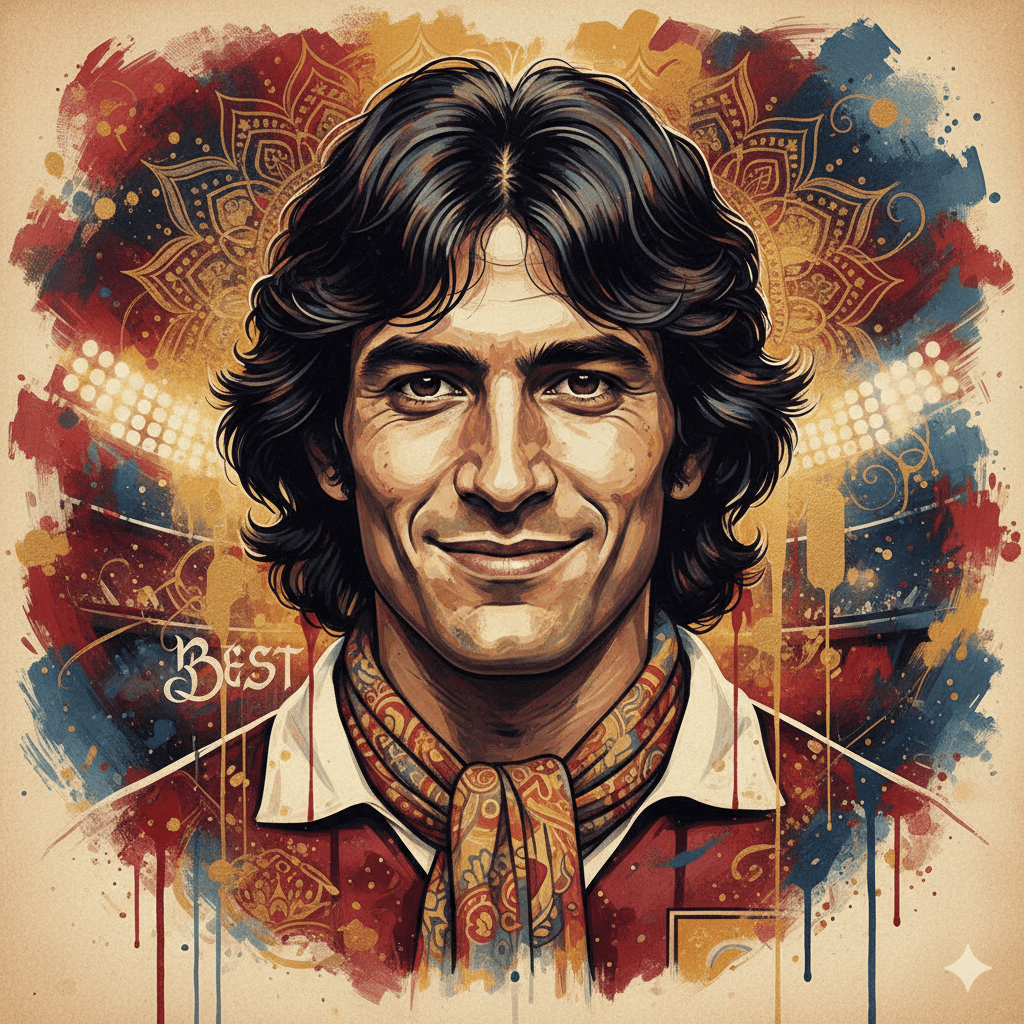
He wore the face of George Best, or so they said—
the same sharp lines, the same long, ’70s hair
that framed a life less athletic, less laired
in stadium light. A different fame, instead,
he grew in mountain shadow, eldest son,
shielded by doting hands from slopes too steep.
The kind of risk his own son would not know.
He took a bride who barely touched his sleep,
a stranger, in a struggle just begun.
Small fry in Beeronkhal, then couped and curled
with uncles, aunts, in city concrete chill—
a heartless town of nobodies, a fist
of prima donnas ruling a grey world.
He moved through rented rooms, a ghost, until
the dream took shape: to simply be, to exist.
The government posts were few, his inching slow,
a ledger-clerk, a slow and steady climb
to manager. A threshold, this time
his own: one room, then two. A car would show,
second-hand, gleaming with the pride of there.
He’d arrived, in a way. He helped his friends,
helped strangers, too—for kindness, or the ends
of flattery, to feel the weight of care.
He wore a shoe for eight hard, polishing years.
Each shirt he owned he hugged until the seam
surrendered to his lanky, patient frame.
He banked each penny, swallowing his fears
to spend on us—his hedge against the stream,
his dream: a civil servant’s staid, sure name,
a lordly son, distinguished, firmly placed
beyond the vagaries he’d braced and faced.
I never heard him have a dream, you see.
He seemed to own just what the day required:
a flock who listened, flattered, or admired;
a pint that cost less than his dignity.
He built a world from almosts, from the strained
and quiet magic of the undefeated—
a man whose best face was the one he feigned,
while all his private victories retreated.


Leave a Reply